Research — Institute of Nanomedicine
About Nano Technology
From atomic scale to a medical revolution — the journey to conquer the microscopic world
What is Nano Technology?
"Nano Technology" (Nanotechnology) is a specialized applied technology involving the manipulation, structuring, and synthesis of materials or devices at the atomic level.
When molecules or material fragments are reduced to a size of 1 to 100 nanometers (nm), they produce materials or devices with novel functions and superior physical, chemical, and biological properties. This not only delivers breakthrough benefits to users but also maximizes economic value.
Ultra-small size
Material structures within the scale of 1 – 100 nm.
High precision
Ability to manipulate and control matter accurately at the microscopic level.
Breakthrough properties
Creates entirely new functions or characteristics completely different from the original material.

How small is Nano scale?
To put it in perspective, a small ant is about 5 mm in size, and the head of a pin is about 1–2 mm long. Even smaller, the diameter of a human hair falls around 10–50 micrometers; dust particles about 10–20 micrometers; and red blood cells about 6–8 micrometers.
The nanometer (nm) scale is far more microscopic than all of these:
Ring of 48 iron atoms on copper surface
~14 nmCarbon nanotubes
~2 nmFullerene molecule
~1 nm
Size comparison scale
Water molecule
0.1 nmGlucose
1 nmDNA / HIV Virus
10 nmBacteria
100 nmHuman hair
10–50 µmRed blood cell
6–8 µmDust particle
10–20 µmWhen Nano Technology enters Medicine
A revolution from ultra-small particles
The human body is inherently structured and operates at the cellular and molecular level. Therefore, when materials are reduced to Nano size, they achieve perfect biocompatibility. Nano particles are small enough to pass through cell membranes and natural biological barriers (even the blood-brain barrier) — something that traditional large-molecule drugs struggle to do.
At the Institute of Nanomedicine, under the leadership of Prof. Dr. Nguyen Duc Nghia, we are mastering and applying this property to solve major challenges in modern medicine and Vietnam's pharmaceutical sector:
Targeted Drug Delivery
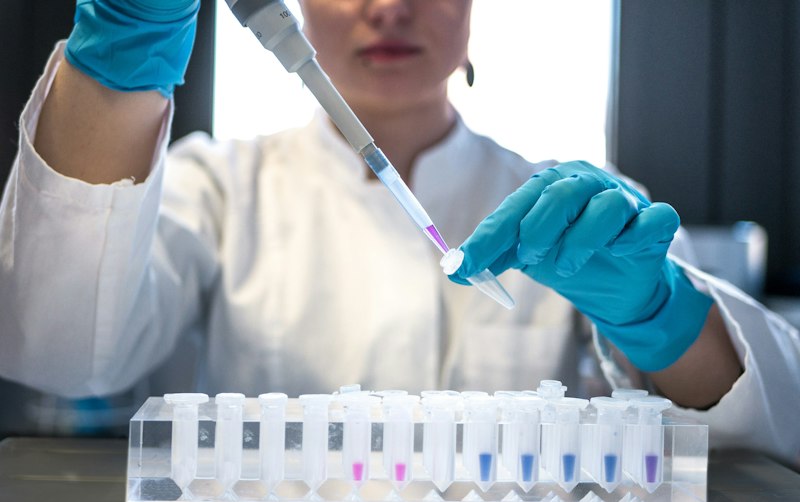
Targeted Drug Delivery System
Nano particles act as intelligent "transport vehicles" equipped with a targeting system. They encapsulate pharmaceutical agents (such as cancer chemotherapy drugs), transport them safely through the bloodstream, and only release the drug upon finding the exact diseased cells. Diseased cells are destroyed while healthy cells are safely protected, minimizing side effects for patients.
Enhanced Bioavailability
Breakthrough Bioavailability of Vietnamese Herbs
Many valuable natural bioactive compounds (such as Curcumin in turmeric, Rutin in sophora flowers) have a major drawback: they are poorly water-soluble, making them difficult for the body to absorb. Nano technology breaks these compounds down to ultra-fine sizes (below 100nm) and encapsulates them in solid-lipid membrane layers. This significantly improves solubility, optimizes bioavailability, and enhances absorption efficacy compared to conventional formulations.